For those with little time
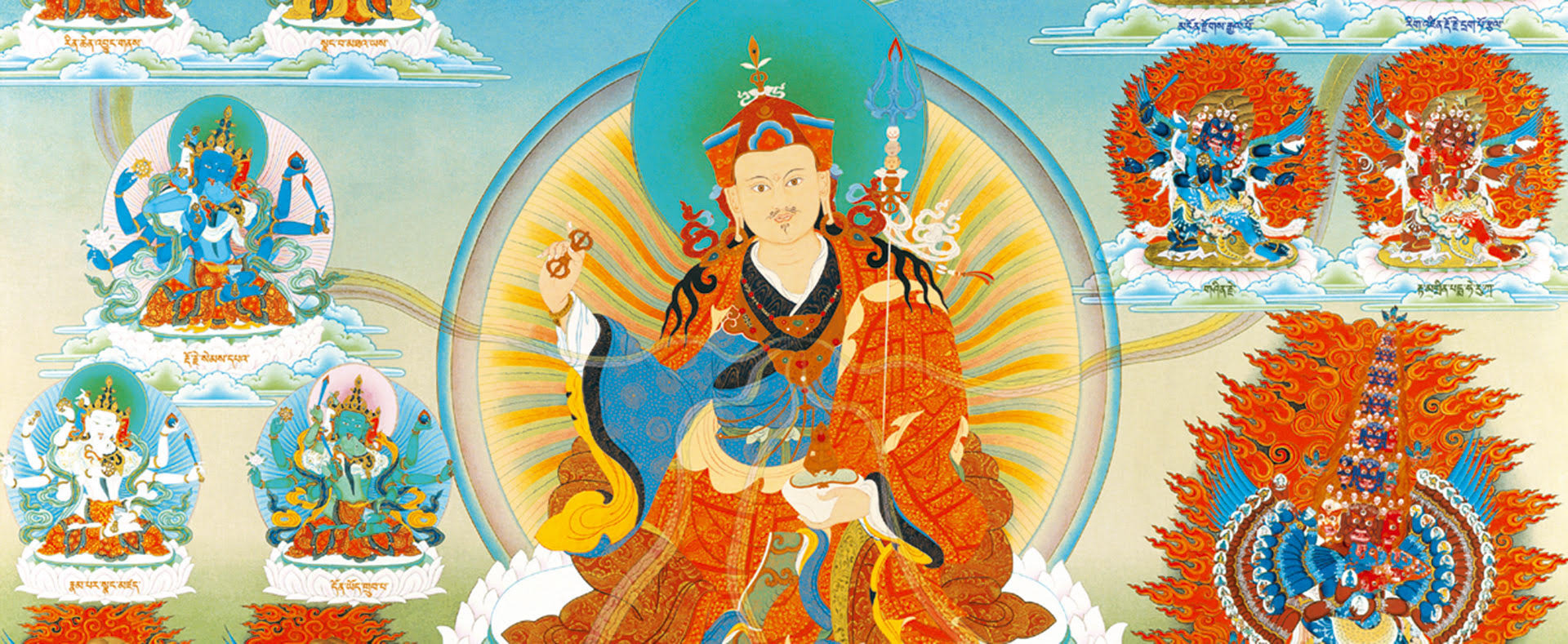
It is necessary to have a Tendrel Nyesel or Guru Rinpoche empowerment to attend these sessions.
Senior Teacher Sébastien Reggiany will hold two practice sessions to guide students on how to do the Brief Tendrel Nyesel sadhana in its simplest form, without performing a tsok. We will walk step-by-step through the practice text, learning how to recite the liturgy in Tibetan and in the native languages of English and French. Pascal Rey, Senior Practice Holder, will join as the Umdze.
These sessions are both for those just becoming familiar with Tendrel Nyesel or who would like to learn how to do the practice more simply.
Schedule
Tuesday 17th March, 19:00-20:00 CET (Paris time)
Introduction and Tendrel Nyesel practice in Tibetan: this session is held in English with German, Spanish and Italian translation.Wednesday 18th March, 19:00-20:00 CET (Paris time)
Introduction et pratique du Tendrel nyésel en français; this session is held in French only.
About Sébastien Reggiany
Sébastien Reggiany was born in France and fell in love with the Dharma in 1993 while travelling to northern India. He met Sogyal Rinpoche in Paris in 1994, and has studied with him ever since. Quitting his job as a physics teacher and leaving his rock band; he entered a three-year retreat in Lerab Ling, Rigpa’s retreat centre in southern France, from 2006 to 2009. Sébastien later helped organize and hold international Rigpa retreats, serving as Sogyal Rinpoche’s teaching assistant.
Over the years, Sébastien has been active in a variety of service, teaching and leadership roles within Rigpa. He is currently salaried by Lerab Ling and Rigpa France to work on the Rigpa Curriculum and its programme of courses and events.
Sébastien has a passion for trying to make sense of the entire path by exploring the sutras, tantras and traditional commentaries, as well as the contemporary ones.
About Pascal Rey
Pascal Rey met Sogyal Rinpoche in 1997. Rinpoche’s book, The Tibetan Book of Living and Dying, had a tremendous impact on him. He has received many teachings and transmissions from visiting lamas in Lerab Ling, Rigpa’s retreat centre in southern France, from 1999 to the present day, and completed Rigpa’s 2006–2009 Three Year Retreat.
Pascal has been a ritual and shrine master (chöpön) in the Vajrayana ritual practices for 10 years. In 2014 he became Rigpa's chant leader (umdzé) after receiving training in Chokling Monastery and Dodrupchen Rinpoche's monastery.
More recently, he has been working on the adaptation of Tibetan Vajrayana rituals and liturgies into Western languages and music.